Adding a free trial to a paid Chrome extension
A trial lets people see what they’d be paying for. For an extension without accounts or a server, it comes down to two numbers kept in extension storage: when the extension was installed, and how many times a feature was used today. Here’s how we do it in Keyturn Kit Pro, and where it can be got around.
The code on this page comes from Keyturn Kit, a WXT + React starter: the free edition is MIT on GitHub, and Pro ($59 once) adds Polar, Dodo Payments, Gumroad, Payhip and trials.
Start the clock at install
runtime.onInstalled fires when the extension is installed (and on updates), so it’s the place to record the first run. Only write the time if it isn’t there yet, or every update would restart the trial:
browser.runtime.onInstalled.addListener(() => void access.start());
start() loads the stored state and, if there’s none, saves { firstRunAt: Date.now(), day: today, used: {} }. Calling it again later changes nothing.
Decide per feature, not per extension
Instead of one “trial over” switch, ask per feature: may this user run export right now? The answer has four cases:
const r = await access.check('export');
if (!r.allowed) return showUpgrade(r.reason); // 'limit' or 'pro-only'
await doExport();
await access.use('export');
- a licensed user: always allowed;
- inside the trial window, counted from
firstRunAt: always allowed; - after the trial, a feature with a daily allowance: allowed until today’s count reaches it;
- after the trial, a feature without one: Pro only.
Call use() after the feature actually ran, so a failed export doesn’t eat one of the free uses. The daily count resets at the user’s local midnight: store the day as YYYY-MM-DD in local time and clear the counts when it changes.
The free uses matter more than they look. A trial that ends with everything locked loses the people who were about to need the extension again next week; three free exports a day keeps them using it, and the paywall shows up at the moment they want more.
Where it can be got around
Reinstalling. Chrome clears storage.local when an extension is removed, so a reinstall starts a fresh trial. We accept that: it costs the user their settings and any key they activated each time, and most people don’t bother.
Editing storage. Anyone with DevTools can change the stored install time or the counters. Like any check that runs on the user’s machine, the trial only stops casual use. If a feature is valuable enough that people will patch your extension for it, it belongs on a server.
Changing the clock. Moving the system clock back extends the trial. Same answer: possible, rare, not worth a server for an extension that sells for a few dollars.
Doing it with Keyturn Kit
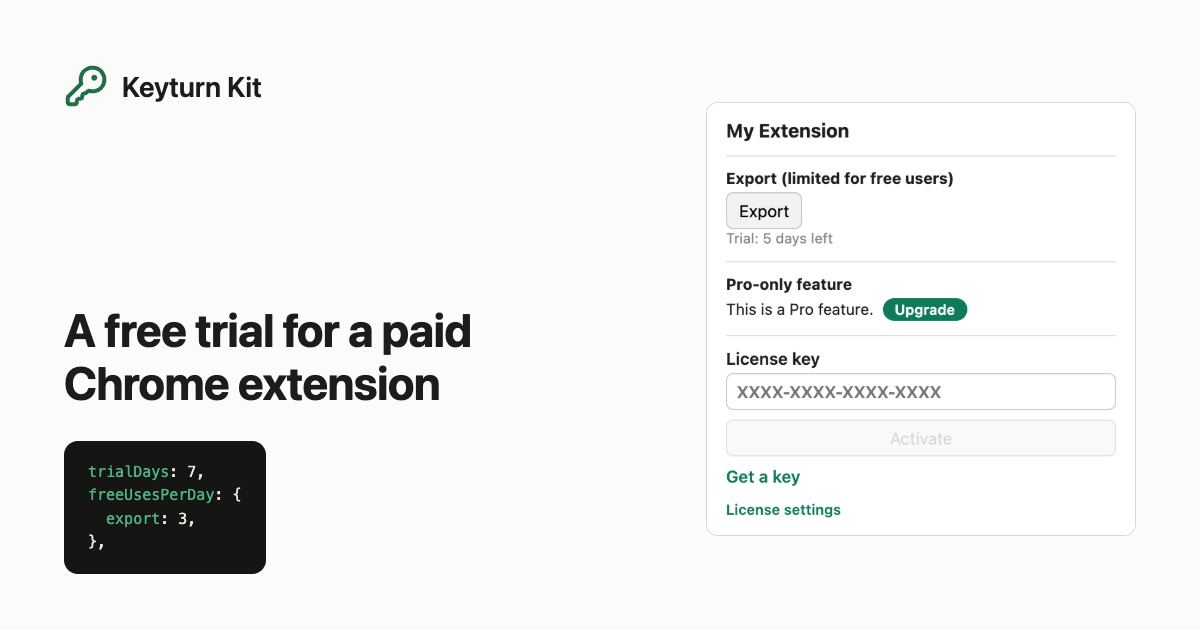
Keyturn Kit Pro ($59 once) includes this as lib/pro/access.ts, with two settings in lib/config.ts:
trialDays: 7,
freeUsesPerDay: { export: 3 },
Pro also adds Polar, Dodo Payments, Gumroad and Payhip next to Lemon Squeezy. The free edition (MIT, on GitHub) has the license key side without the trial; its step-by-step guide is Selling a Chrome extension with license keys, no backend.